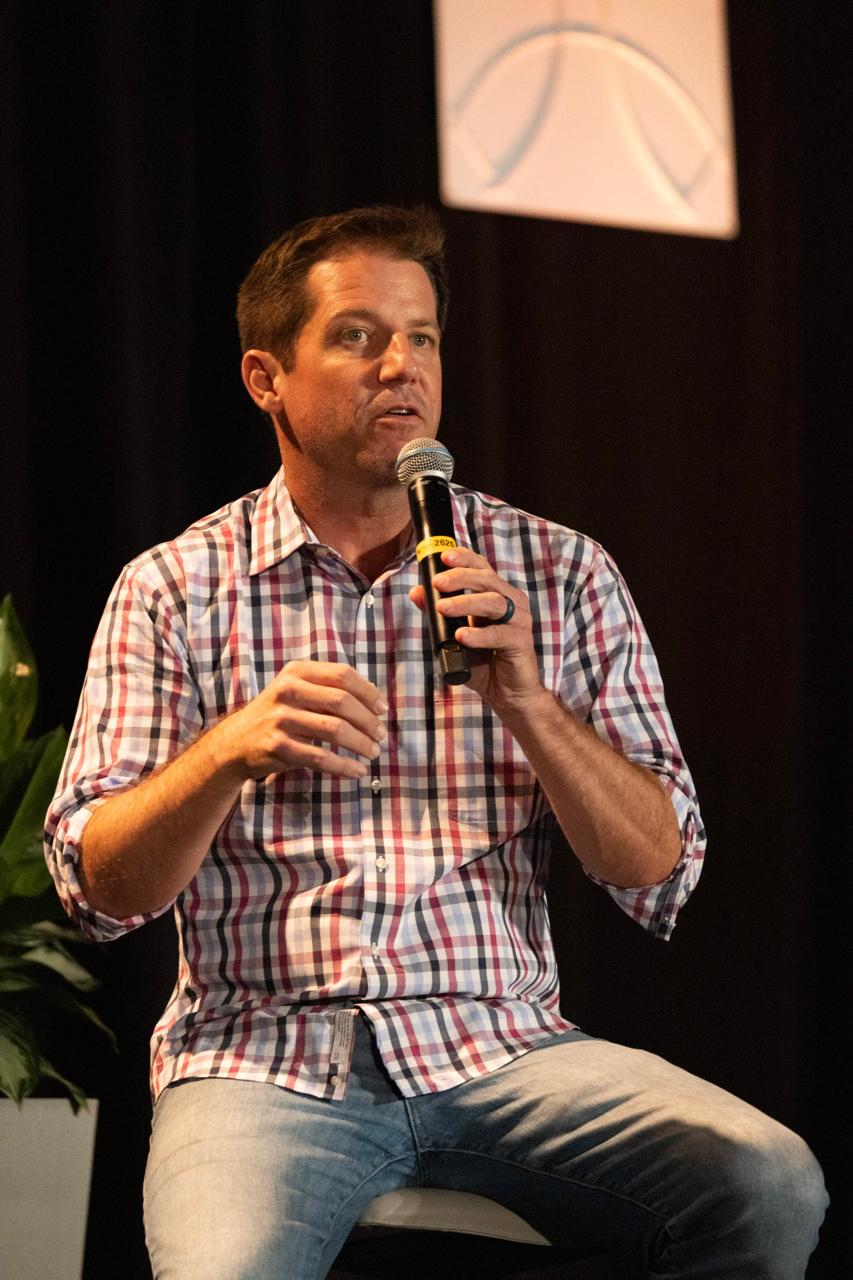
Meet Justin Goodman

leader, mental health advocate, speaker, author and the driving force behind Project 55! Justin’s commitment to transforming how students and professionals approach mental health fuels everything he does. His personal experience navigating the invisible pressures of high-stakes environments gave him a front-row seat to a truth few are willing to name: the people achieving the most are often the ones quietly falling apart. And the people closest to them are usually the first to notice, yet the last to be equipped to do something about it.

That recognition became a mission. Justin founded Project 55, a mental health movement built on one foundational belief: the barrier to saving someone’s life was never credentials. It was being close enough to see it, caring enough to act on it, and prepared enough to know how. This movement wasn’t born in a textbook. It was born from lived experience and a deep conviction that no student should suffer in silence and no leader should lose themselves in the pursuit of excellence.

By partnering with mental health experts, Justin developed practical frameworks that integrate emotional intelligence, mental health awareness, and actionable intervention skills into school environments and business settings alike. His focus on redefining strength (not as suppression, but as empathy, awareness, and the courage to act) has resonated with school districts, universities, and organizations nationwide.

More on Justin’s Story

Somebody in your audience is struggling right now. They’re smiling. They’re showing up. And they’re drowning. Justin Goodman knows, because he was that person. It started the way it starts for a lot of people. A kid getting bullied finds the one thing that makes the noise stop. For Justin, that was golf. It became his identity, his escape, and eventually the only version of himself he knew how to be. Then a devastating diagnosis took it away. Overnight, the thing that defined him was gone. And without it, Justin had no answer for the question that followed him everywhere: who am I without this? That silence became dangerous. Opioid painkillers led to addiction. Depression and social anxiety took hold. Justin became the fraternity brother everyone liked but nobody really knew. He showed up. He smiled. And behind all of it, he was quietly falling apart. The weight of it pushed him to a place he didn’t think he could come back from. Justin attempted to take his own life. He survived. But it wasn’t a hospital or a hotline that pulled him back. It was two fraternity brothers who had been watching closer than Justin realized. While everyone else accepted the smile at face value, these two refused to. They saw the withdrawal, the changes, the things that didn’t add up. And instead of assuming someone else would handle it, they showed up at his door, looked him in the eye, and started asking the questions everyone else was too afraid to ask. That single act of courage changed the entire trajectory of Justin’s life.

The Shift

Justin got clean. Then he got to work, turning the worst chapter of his life into a mission to make sure no one has to wait as long as he did for someone to step in.

Whether it’s fifty students in a classroom or thousands in an auditorium, Justin doesn’t give a lecture. He tells the truth about what it feels like to silently fall apart while everyone around you assumes you’re fine. That honesty opens a door most talks never touch. And he doesn’t leave your audience there. He gives them something they can actually use: the confidence and the tools to be the person who steps in when it matters most.

Impact & Credentials

The lesson that saved Justin’s life became the principle behind everything he builds: nobody gets across the finish line by themselves. That conviction isn’t just something he talks about. It’s how he operates. Every venture he has launched, he has launched as a co-founder, because the model that saved him is the model he refuses to abandon.

His nonprofit, Away To Help, provides clean water to over 150,000 Ugandans every year. His company, Total CSR, helps agency owners build training and development systems that retain top talent, reaching over 100,000 people annually. And his latest organization, Project 55, is working to equip everyday people to transform mental health outcomes at home, school, and work.

Across three organizations and hundreds of thousands of lives touched, the throughline has never changed: equip the people closest to the problem with the skills to solve it. Because the barrier to saving someone’s life was never credentials. It was being close enough to see it, caring enough to act on it, and prepared enough to know how.